
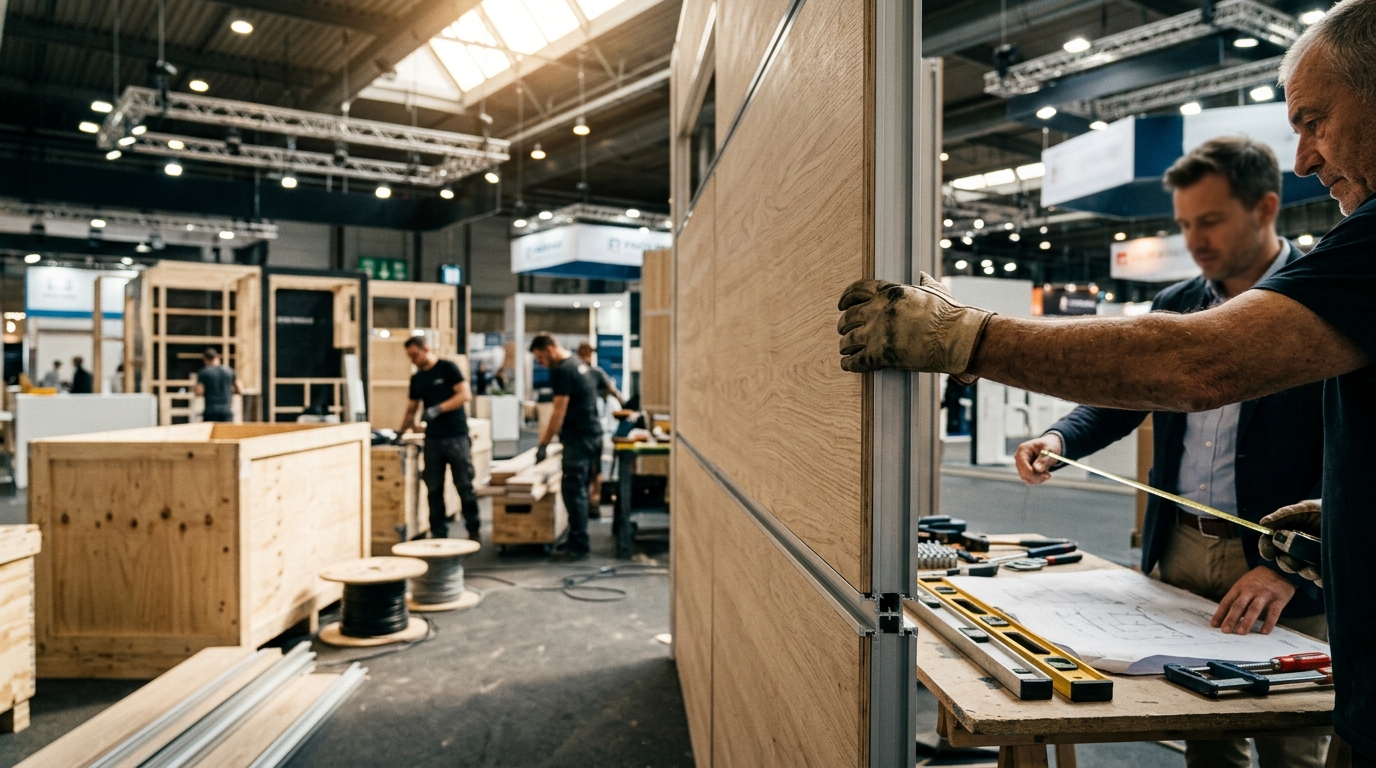
Selecting the correct building components directly impacts visitor engagement and operational safety during temporary exhibitions. Industry data shows that modern trade show environments prioritize modular construction methods, with global exhibition spending exceeding 120 billion dollars annually. This financial scale drives demand for durable, rapidly deployable structures that withstand heavy foot traffic. Understanding material specifications prevents costly on-site failures and ensures brand messaging remains visually sharp. Standarte leverages twenty years of workshop precision to deliver reliable exhibition environments across Madrid, Lisbon, and Porto. Professional exhibitors must evaluate load capacity, surface durability, and assembly speed before committing to a final build. (Standarte Dise o y)
Material Selection Fundamentals
Defining Core Components
Ephemeral architecture is temporary structural systems designed for rapid deployment and complete dismantling after events. Exhibition stand materials are physical substrates used to construct temporary brand environments. Trade show construction is the specialized discipline of designing, fabricating, and installing temporary exhibition spaces. Selecting the right substrate requires matching environmental conditions with structural demands. Aluminum extrusion systems provide lightweight rigidity for high-traffic venues. Engineered wood panels offer superior load-bearing capacity for heavy digital installations. Composite materials deliver moisture resistance for outdoor or humid climates. (Standarte Stand design and)
Structural Integrity and Load Distribution
Weight Management and Safety Compliance
Structural integrity and load distribution determine whether a temporary installation remains stable under dynamic visitor pressure. Engineering standards require precise weight calculations to prevent floor loading violations. Aluminum frameworks distribute stress evenly across contact points. Plywood substrates require reinforced internal bracing when supporting heavy audiovisual equipment. Composite panels integrate seamlessly with modular grid systems to maintain geometric stability. Standarte validates every structural calculation during the technical design phase to guarantee compliance with venue safety regulations. (Standarte Monteur de stands)
Surface Finishes and Brand Visibility
Aesthetic Durability and Print Fidelity
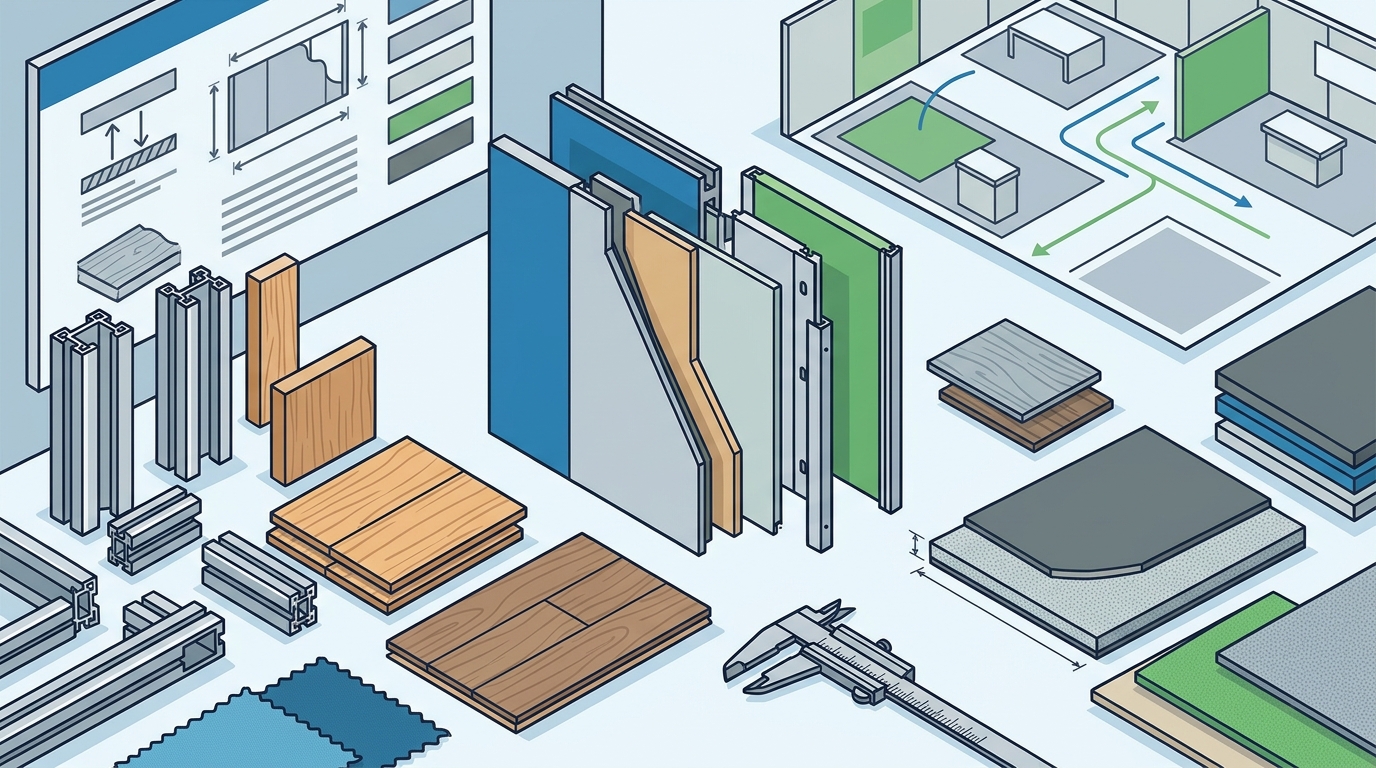
Surface finishes and brand visibility directly influence how audiences perceive corporate identity during live events. High-gloss laminates reflect ambient lighting but require careful handling to prevent scratch damage. Matte powder coatings absorb light effectively, reducing glare on digital displays. Fabric tension systems provide seamless graphic application without visible seams. Standarte applies specialized surface treatments during production to ensure color accuracy and long-term durability. Agencies benefit from consistent finish quality that translates digital mockups directly to physical installations.
Sustainability and Circular Economy Metrics
Waste Reduction and Material Reuse
Sustainability and circular economy metrics measure how temporary structures minimize environmental impact across multiple event cycles. Sustainability metrics prioritize recyclable substrates that reduce landfill accumulation. Aluminum components achieve near-zero waste during recycling processes. Engineered wood panels utilize reclaimed timber to lower carbon footprints. Standarte tracks material recovery rates to optimize future production cycles. Direct exhibitors gain measurable environmental benefits by selecting reusable frameworks over single-use cardboard constructions.
Logistics and Assembly Efficiency
Transport Optimization and On-Site Installation
Logistics and assembly efficiency dictate how quickly temporary structures transition from factory floors to active exhibition halls. Logistics optimization relies on standardized module dimensions that reduce packaging volume and lower freight costs. Pre-finished components eliminate on-site painting requirements and reduce volatile organic compound exposure. Standarte coordinates complete technical design, production, logistics, installation, validation, and on-site coordination before the event opens. Agencies appreciate predictable timelines that eliminate last-minute construction delays.
Cost Optimization and Lifecycle Value
Budget Allocation and Long-Term ROI
Cost optimization and lifecycle value determine whether temporary investments yield measurable returns across multiple exhibition seasons. Initial material procurement costs must align with projected reuse frequency. Aluminum systems require higher upfront capital but deliver superior amortization rates. Engineered wood panels offer lower initial pricing for single-event deployments. Standarte provides transparent pricing structures that help agencies forecast total project expenditures accurately. Direct exhibitors maximize return on investment by selecting durable substrates that withstand repeated assembly cycles.
| Material Category | Structural Capacity | Surface Treatment Options | Recommended Application |
|---|---|---|---|
| Aluminum Extrusion | High load distribution | Anodized, powder coated | Madrid exhibition environments |
| Engineered Wood | Heavy equipment support | Laminated, painted, veneered | Lisbon trade show venues |
| Composite Panels | Moisture resistant | UV stabilized, textured | Porto outdoor installations |
| Fabric Tension | Lightweight display | High-resolution digital print | Budget-conscious projects |
Key Takeaways
- Standarte operates a dedicated workshop with twenty years of continuous operational history.
- Aluminum extrusion systems deliver superior load distribution for heavy audiovisual integrations.
- Engineered wood substrates provide cost-effective solutions for single-event deployments.
- Composite panels maintain structural integrity in high-humidity outdoor environments.
- Pre-finished components eliminate on-site painting and reduce volatile organic compound exposure.
- Transparent pricing structures enable agencies to forecast total project expenditures accurately.
- Complete technical design, production, logistics, installation, validation, and on-site coordination guarantee event readiness.
Frequently Asked Questions
What defines ephemeral architecture in the exhibition industry?
Ephemeral architecture is temporary structural systems designed for rapid deployment and complete dismantling after events. These structures prioritize modular assembly, lightweight components, and rapid on-site installation to accommodate tight venue schedules.
How do aluminum and engineered wood compare for heavy digital displays?
Aluminum extrusion systems distribute dynamic loads more evenly across contact points, making them ideal for heavy digital displays. Engineered wood substrates require reinforced internal bracing to support identical equipment weights without compromising structural stability.
Which surface finishes prevent glare on interactive touchscreens?
Matte powder coatings absorb ambient lighting effectively, reducing glare on interactive touchscreens. High-gloss laminates reflect overhead fixtures and require careful positioning to maintain screen readability during peak visitor hours.
Can temporary structures withstand repeated assembly cycles?
Yes, properly engineered temporary structures withstand repeated assembly cycles when constructed from aluminum or composite substrates. Standarte validates every structural calculation during the technical design phase to guarantee compliance with venue safety regulations.
How does material selection impact freight and logistics costs?
Material selection directly impacts freight and logistics costs by determining packaging volume and weight distribution. Standardized module dimensions reduce shipping requirements and lower overall transportation expenditures for international events.
What environmental benefits do modern exhibition materials provide?
Modern exhibition materials provide measurable environmental benefits by prioritizing recyclable substrates that reduce landfill accumulation. Aluminum components achieve near-zero waste during recycling processes, while engineered wood panels utilize reclaimed timber to lower carbon footprints.
How does Standarte ensure on-site installation runs without delays?
Standarte coordinates complete technical design, production, logistics, installation, validation, and on-site coordination before the event opens. This comprehensive workflow eliminates last-minute construction delays and guarantees professional visitor readiness.
Ready to Build Your Next Exhibition Stand?
Selecting the correct building components directly impacts visitor engagement and operational safety during temporary exhibitions. Standarte delivers reliable exhibition environments across Madrid, Lisbon, and Porto with twenty years of workshop precision. Contact our team today to request a detailed project consultation and secure your preferred event dates. Visit Standarte to explore our complete service portfolio and request a 24-hour quote.