
Hiring a Stand Construction Company: 7 Critical Criteria for Exhibition Success
The exhibition industry is a massive economic engine. According to data from the International Association for Exhibition Data, the global exhibition sector generates over $1 trillion in economic impact annually. This scale underscores why selecting the right partner is not merely a logistical detail but a strategic business imperative. A poorly constructed stand can obscure your brand message, while a well-engineered one can drive significant lead generation and market authority. This guide outlines the essential factors to evaluate when hiring a stand construction company to ensure your investment yields maximum return.
Why Experience and Local Knowledge Matter
When hiring a stand construction company, geographic expertise is often the most overlooked yet critical factor. Exhibition centers in different cities have unique regulations, load-bearing limits, and logistical constraints. A company that operates locally or has a proven track record in your specific target city can navigate these complexities seamlessly.
For instance, Standarte highlights its extensive network across Spain and Portugal, noting specific expertise in cities like Madrid, Barcelona, and Lisbon. Each of these locations has distinct ferial calendars and regulatory bodies. Madrid, for example, hosts major events at IFEMA, while Barcelona relies heavily on Fira de Barcelona. Understanding these local nuances prevents costly delays and compliance issues.
Furthermore, experience translates to reliability. A company with decades of history, such as one with 20 years of experience, has likely encountered and resolved numerous on-site challenges. This institutional knowledge ensures that unexpected problems are handled with precision rather than panic.
Technical Capabilities and In-House Production
The quality of your stand is directly tied to the quality of its construction. One of the most significant advantages of hiring a company with in-house capabilities is the control over the manufacturing process. When a company owns its workshop, it can ensure that materials meet strict quality standards and that production timelines are strictly adhered to.
According to industry standards, in-house production allows for greater flexibility in making last-minute adjustments. If a design element needs refinement, an in-house team can modify it immediately without waiting for external vendor schedules. This agility is crucial in the fast-paced exhibition environment where deadlines are non-negotiable.
Additionally, in-house workshops often utilize advanced machinery and techniques. This technological edge results in finer finishes and more durable structures. For example, companies that specialize in architectura efímera (ephemeral architecture) often employ specialized carpentry and metalworking skills that generic contractors may lack.
Design Process and 3D Visualization
A robust design process is the foundation of a successful exhibition stand. The best companies do not just build what you ask for; they collaborate to create a space that aligns with your brand identity and marketing goals. This collaboration typically begins with a detailed brief and evolves through iterative design phases.
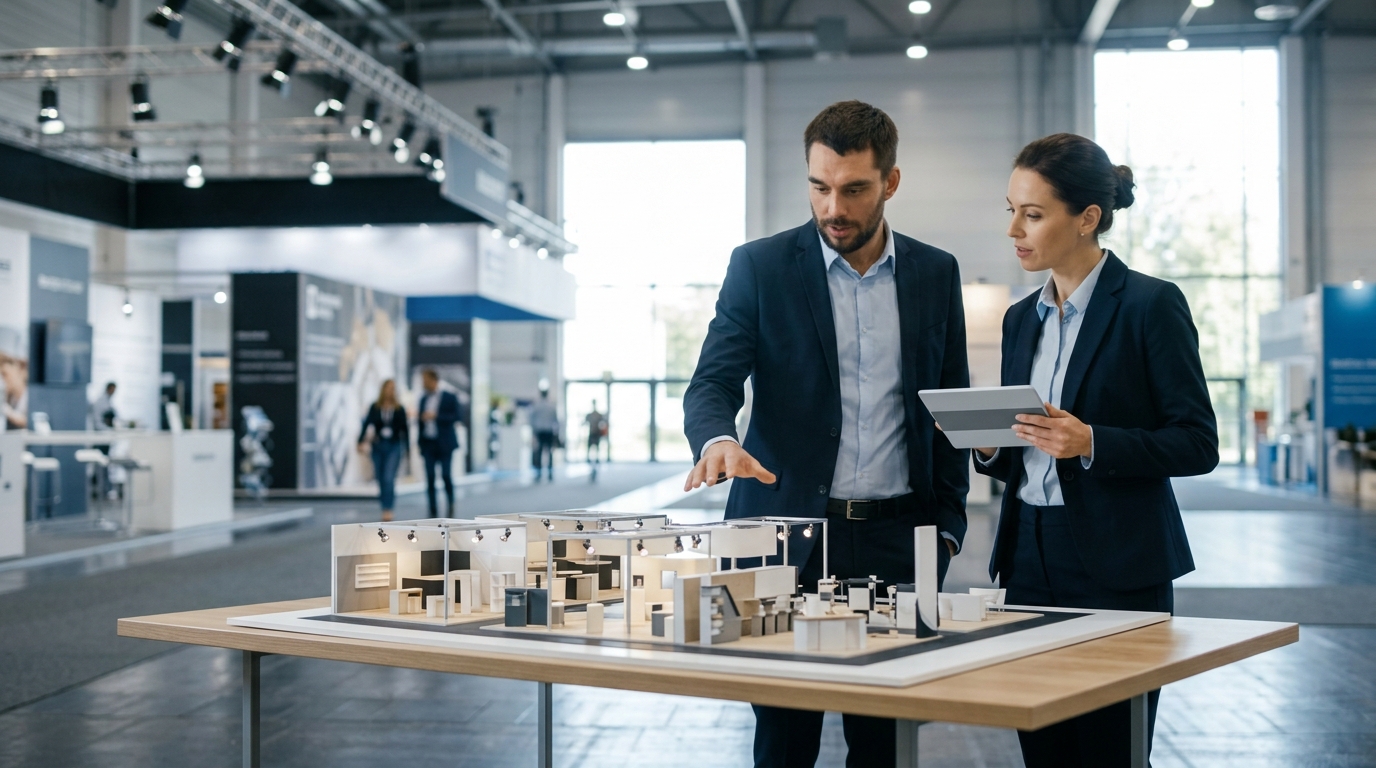
3D visualization is a non-negotiable tool in this process. It allows you to walk through your stand before a single piece of wood is cut. This technology helps identify potential issues with flow, lighting, and spatial awareness. It also ensures that all stakeholders have a unified vision of the final product.
Look for a company that offers comprehensive design services, including diseño de stands (stand design) that considers human traffic flow. A well-designed stand guides visitors naturally through your product displays, maximizing engagement. Poor flow can result in dead zones where visitors simply walk past, wasting valuable exhibition real estate.
Logistics and On-Site Coordination
Exhibition logistics are complex. They involve transporting heavy materials, coordinating with venue staff, managing electrical and IT connections, and ensuring safety compliance. A reputable stand construction company will manage all these aspects, providing a single point of contact for the entire project.
Effective logistics planning begins months before the event. This includes securing necessary permits, scheduling delivery windows, and arranging for on-site supervision. According to data from major exhibition organizers, late deliveries are a leading cause of setup failures. A company with strong logistical networks can avoid these pitfalls by planning ahead.
On-site coordination is equally important. The construction team must work efficiently to meet tight installation deadlines. This requires experienced foremen who can manage subcontractors and ensure that the build adheres to the approved plans. Look for a company that provides in-situ coordination to guarantee that the stand is ready for the opening ceremony on time.
Sustainability and Material Standards
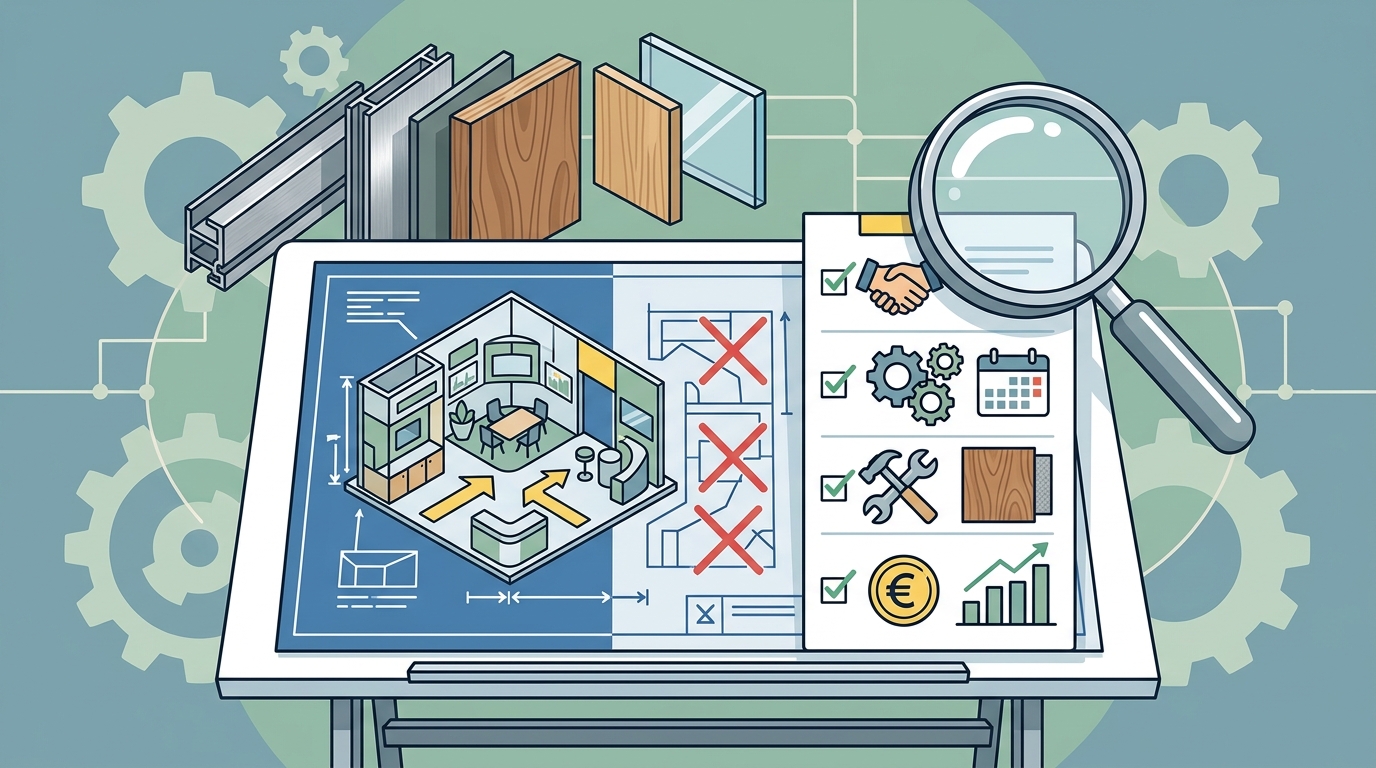
Sustainability is no longer optional in the exhibition industry. Buyers and attendees increasingly expect brands to demonstrate environmental responsibility. Therefore, the materials and methods used in stand construction are critical evaluation criteria.
When hiring a company, ask about their material sourcing. Do they use recycled materials? Are their finishes low-VOC (Volatile Organic Compounds)? Can the stand be disassembled and reused for future events? Companies that prioritize ecológico y sostenible (ecological and sustainable) practices not only reduce their carbon footprint but also enhance your brand's reputation.
Furthermore, consider the longevity of the structure. Modular systems allow for components to be reused across multiple campaigns. This approach reduces waste and offers a better return on investment over time. A company that offers both custom and modular solutions provides flexibility to balance creativity with sustainability.
Reviewing Portfolio and Past Performance
Your due diligence should include a thorough review of the company's portfolio. Look for projects that are similar in scale, complexity, and industry to your own. A company that has successfully built stands for technology firms may not have the aesthetic sensibility required for a luxury fashion brand.
Pay attention to the details in their portfolio. Are the finishes clean? Is the lighting well-integrated? Does the design feel cohesive? These visual cues indicate the company's attention to detail and commitment to quality. Additionally, check for diversity in their portfolio. A company that has worked across multiple sectors demonstrates adaptability and broad expertise.
Client testimonials and case studies are also valuable. They provide insight into the company's communication style, responsiveness, and ability to meet deadlines. According to industry reports, client satisfaction is often linked to the clarity of communication during the design and build phases.
Pricing Transparency and Contract Clarity
While cost should not be the sole deciding factor, it is a significant consideration. The best way to evaluate pricing is to look for transparency. A reputable company will provide a detailed quote that breaks down costs for design, materials, labor, logistics, and any additional services.
Beware of vague estimates or quotes that seem significantly lower than competitors. These often hide additional costs that will emerge later. For example, a low base price might exclude electrical work or graphics installation. Always ask for a comprehensive breakdown to avoid surprises.
Contract clarity is equally important. The contract should specify the scope of work, payment terms, delivery schedules, and cancellation policies. It should also outline who is responsible for damages or delays. A clear contract protects both parties and ensures a smooth partnership.
Comparison of Service Models
| Service Model | Pros | Cons | Best For |
|---|---|---|---|
| In-House Production | Quality control, flexibility, faster revisions | Higher overhead, limited to local reach | Complex, high-end custom builds |
| Modular Systems | Cost-effective, reusable, quick setup | Limited customization, generic look | Multi-city tours, budget-conscious brands |
| Hybrid Approach | Balances cost and creativity | Requires careful coordination | Brands seeking unique identity with efficiency |
Key Takeaways
- Local Expertise: Choose a company with proven experience in your specific exhibition city to navigate local regulations and logistics.
- In-House Workshop: Companies with their own workshops offer superior quality control and faster turnaround times for design changes.
- 3D Visualization: Insist on detailed 3D renders to validate design flow and aesthetics before construction begins.
- Sustainability: Prioritize partners who use eco-friendly materials and offer reusable modular solutions to align with corporate responsibility goals.
- Transparent Pricing: Request itemized quotes to avoid hidden costs and ensure budget alignment.
- Portfolio Review: Evaluate past projects for relevance, quality, and diversity to ensure they match your brand's needs.
- Comprehensive Coordination: Ensure the company manages all aspects from design to on-site installation for a seamless experience.
Frequently Asked Questions
How far in advance should I book a stand construction company?
It is recommended to book at least 3 to 6 months in advance for major exhibitions. This allows sufficient time for design, production, and logistics planning, especially for complex custom builds.
What is the difference between custom and modular stands?
Custom stands are built from scratch to fit specific brand requirements and often use unique materials. Modular stands use pre-fabricated components that can be reconfigured. Custom offers higher uniqueness, while modular offers cost savings and reusability.
Do stand construction companies handle graphics and branding?
Yes, most full-service companies include graphic design, printing, and installation as part of their package. This ensures that your branding is integrated seamlessly into the physical structure.
How do I ensure the stand is sustainable?
Ask about the materials used, such as recycled aluminum or FSC-certified wood. Inquire if the design allows for disassembly and reuse. Some companies also offer carbon offset programs for their logistics.
What happens if there are issues on-site during the event?
Reputable companies provide on-site support staff to handle any technical or structural issues immediately. This ensures that your stand remains functional and safe throughout the event.
Can I visit the workshop before hiring?
Many companies welcome potential clients to visit their workshops. This provides insight into their production capabilities, quality standards, and operational efficiency.
How is the cost of a stand calculated?
Costs are typically calculated based on the square meterage, complexity of design, materials used, and additional services like electrical or IT. A detailed quote will break down these components.
Ready to Elevate Your Exhibition Presence?
Choosing the right stand construction company is a decision that impacts your brand's visibility and success. By evaluating these seven critical criteria, you can partner with a company that not only builds a stand but creates an experience. For expert design and construction across Spain and Portugal, contact Standarte today to discuss your next exhibition project.